Asana Onboarding Case Study: Building a Marketing Production System That Scales
See how a dynamic intake system, custom Asana templates, and clear stakeholder roles brought order to a fast-growing, multi-location marketing team. This case study breaks down the exact process used to build, launch, and onboard a project management system that actually stuck.
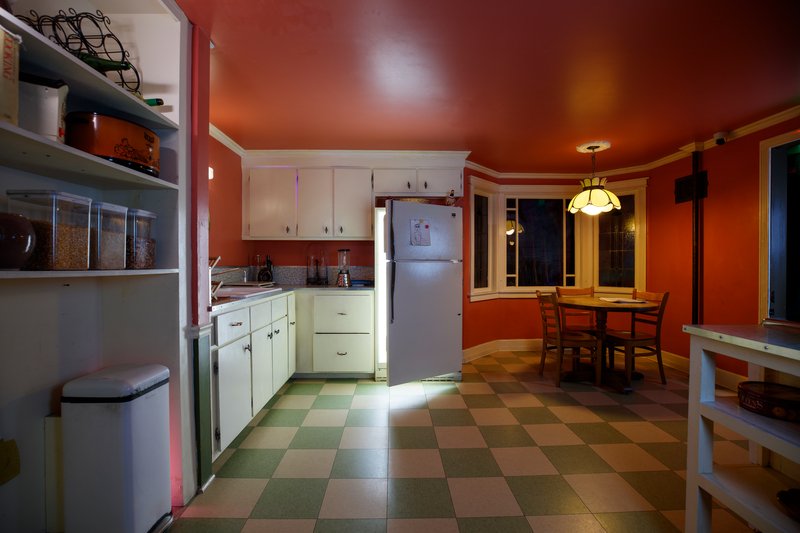
Photo by Kate Russell
Meow Wolf is one of the biggest names in immersive entertainment across the globe. Founded in 2008 as a scrappy artist collective, their first permanent installation, The House of Eternal Return, opened in Santa Fe, NM in 2016. Ten years later, they have five permanent installations open in Las Vegas, Denver, Grapevine, and Houston, with their sixth and seventh currently in the works.
Growth at that pace rarely leaves room for process. Meow Wolf's marketing team of about 40 had built its own internal production team to support concurrent campaigns across every location, but the structure to support that team hadn't caught up yet. That's where I came in, brought on to build the processes for starting new creative projects and tracking the ones already in motion.
The problem: a team without a system
At the time, each of Meow Wolf's locations had its own marketing team, and one creative director served all of them. Projects went straight from the location teams to her, and without a clear system in place, nothing had a consistent path from idea to execution. Things stalled. Good work sat unfinished. Nobody could say with confidence what was on time, on budget, or even in progress.
Building the framework first
Before touching Asana, I helped define what the marketing production team's role actually was within the larger organization. The marketing team had location-specific leads, a creative director, and a copywriter, but relied on other internal departments and external vendors for graphic design, video, and photo production.
I introduced the marketing production team as the funnel for that structure: requests came in from the different locations to the production team for vetting before being routed out to the proper internal and external partners to get the work done. This would allow the production team to flag and resolve any resource conflicts before projects even started.
I also introduced a DACIX framework to the group, my own adaptation of DACI, adding an X to name who was responsible for executing the work, not just deciding, contributing, or staying informed. The DACIX was presented at the kickoff call for every project, so every stakeholder knew exactly where they stood from day one.
Intake and alignment
The first system I built in Asana was a dynamic request form. If someone indicated they wanted video, the form would surface additional questions specific to video: what placements they were planning, any out-of-home ambitions, and so on. The form only asked what was relevant, which kept intake fast without losing detail.
Every request then moved into a kickoff call, where the DACIX was shared alongside a summary of the request and its goals, aligning every stakeholder and every doer before work began.
Templates built to scale
For larger campaign work, I built project templates designed to scale with the team's output.
The integrated marketing campaign Asana project template accounted for creation, proofing, and approval across every channel a campaign might touch. It included a concepting phase with built-in review points, then broke out into individual tracks. For example, a copy track with clear deadlines for drafts and reviews, and a video production track, with enough lead time built in for shoot prep, picture lock, color grading, and cut downs. Every timeline automatically scheduled tasks backward from the campaign's start date.
I built a second template that was slightly more simple, specifically for video and photo shoot production.
Alongside the campaign work, a master board tracked every project across every location, giving the team one place to see the full picture at a glance.
Rollout and adoption
A system is only as good as the team's willingness to use it. I ran separate trainings for each type of collaborator: one for requesters, one for the creative team, one for higher-level stakeholders and approvers, and one for internal department partners. Each training was tailored to how that group would actually interact with the system.
Once a month, I met with each requesting team to review the master board together, confirm nothing had fallen through the cracks, and talk through what was coming up next.
The result
Deadlines stopped slipping as often. Projects that had stalled for months finally shipped. There was less scrambling across the board. Location marketing leads saw work landing on time and on budget, and the creative team was free to focus on the creative work itself, without carrying the weight of tracking and organizing it too.
Gleana Albritton, Meow Wolf's then-Director of Production, put it this way:
"Cheyenne helped us to research, implement, and onboard our marketing team to Asana in an intuitive, easy manner for us all.
Cheyenne has a natural ability to break down projects into easy-to-understand and digestible nuggets, while making sure to eradicate inefficiencies.
I appreciated her ability to navigate so many distinct, colorful, quite frankly tough personalities with diplomacy and aplomb.
Cheyenne has an eye for the 30,000 foot view of issues, while being able to drill down to the details, a rare and unique talent that quite often isn't something you can teach.
I'd highly recommend Cheyenne and would gladly hire her a million times over. She's the full package."
Heather Burdette, Meow Wolf Las Vegas’ then-Marketing Manager, had this to say:
“Cheyenne struck me as very level-headed, clear, kind, and most of all, consistent. That combination is especially crucial when trying to get people to adopt a new system, and inside organizations that are essentially running project management on "well, this is how we've always done it and it's working fine".
What she brings isn't just a framework, it's the formal training background and skill/levelheadedness in guiding execution according to proven process systems. I would have benefitted from having her around a lot sooner.”
The takeaway
Fast growth doesn't have to mean permanent chaos. Even the most matrixed, creative-heavy team can find its rhythm with the right structure behind it, one that respects how the work actually flows, not just how an org chart says it should.
If your team feels like it's held together by good intentions and someone's memory, that's exactly what the Rhythm Reset is built to untangle. Book a Fit Call with me to get started.